CPA Pearland AlternativeTwo doors, one rate
The owner found one rate on two doors and wanted the shape without anyone's numbers. Sometimes the useful thing is the shape without anyone's numbers. This page is a hypothetical. No client is described.
Talk about your own tills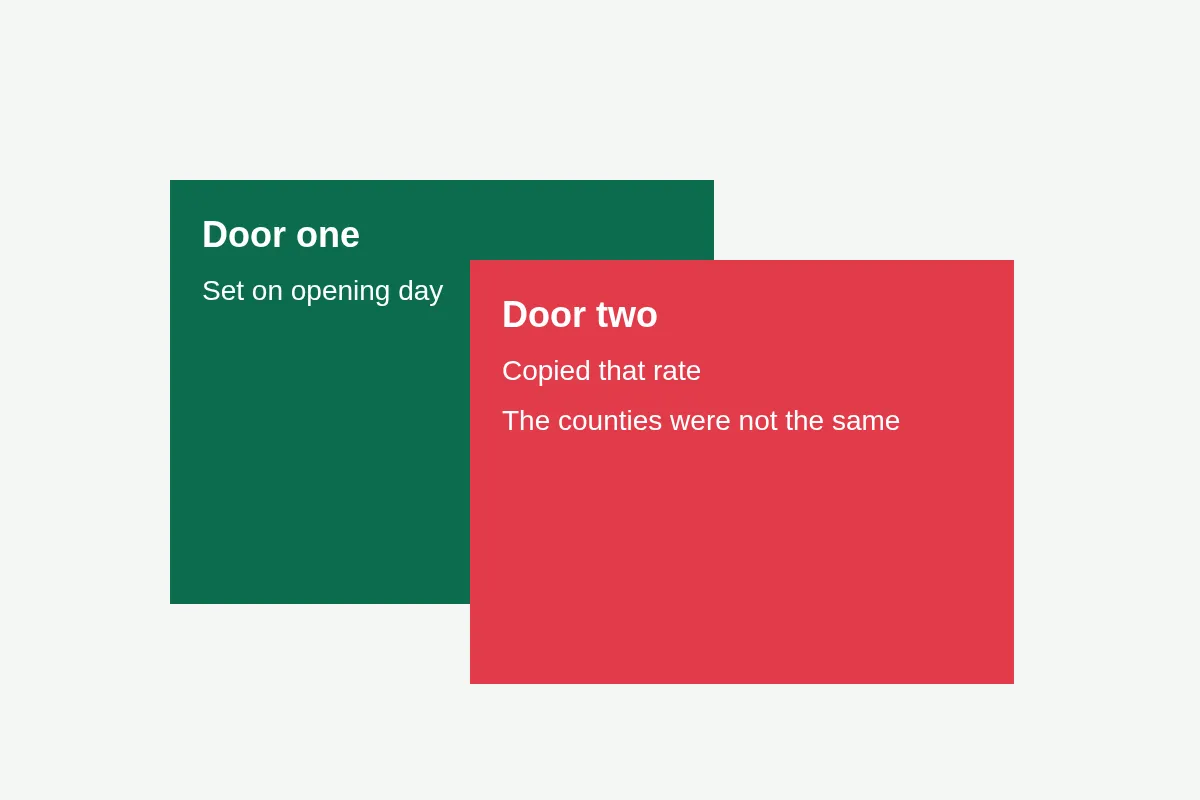
The shape, amounts left off.
Say an owner had two doors and one rate, typed in on the day the second door opened because the software asked a question and the answer from the first door was still on the screen. For a year the deposits looked fine. The returns looked fine. Nobody felt a leak.
Then a notice, or a buyer, or a particularly careful Saturday manager, asked which county each door sat in. One door was in Brazoria County. One door was not. The rate that had felt like a house style was right at one door and wrong at the other. No daily total is printed here. No name and no balance. What matters is which step comes first.
In the version we would rather see, the second door's rate is set on the day it opens, from the block, not from the first door's habit. Each month is closed with both reports visible. The wrong year, if it happened, is rebuilt only as far as it needs to be, and the amount of that rebuild is not invented on a web page.
Oil found nearby in 1934 opened the Hastings field, and dance halls drew crowds from the surrounding leases. A Saturday can arrive all at once, and a Monday still has to count it. We picture it as history, not as a night we spent there. The wink is the same Monday. Count the door that earned the money. Do not let the louder door speak for both.
What the owner could still decide.
While the year is open, the setting can be changed and the estimates can be reset from the corrected months. How the company is taxed can still be talked through before that window shuts. Gear at the new door can be written onto the rendition while someone still remembers it arrived.
Changing the setting, resetting the estimates, and listing the new door can all happen with no attest cover attached. They need months that tie to the bank and reports that tie to the doors. That pairing is the work.
If this shape is not your year, the page can still show what we refuse to average. The file with your name on it never lands on this page. A year smoothed into one rate and one story is the thing we will not build.
Week one of the hypothetical is the second door opening. Week two is the first Saturday that should have looked different and did not. The weeks after that are ordinary, which is how a wrong setting survives. Ordinary is not the same as correct. In October the owner finally asks. The closed months, if they had been split, would have answered. The blended months answer with a shrug.
Why the amounts stay off.
Any total printed here would be invented, and an invented total teaches the wrong lesson. The lesson is the shape. Two doors. One rate. A year of plausible deposits. A question that arrives later than it should have.
Your file is asked for only after both sides can name the scope. Amounts can stay off the form. It is enough to say that two registers have been sharing a rate and you are no longer sure they should.
A buyer reading the smoothed year would underwrite a company with one tax life. The company had two. Kindness to the chart is unkindness to the buyer and to the owner who has to live with the notice. We would rather the two doors stay visible.
You can go back to the two totals if you want the real codes, or stay here if the shape was what you needed. Either reading is free. The call, if you want it, is still just a conversation until a letter is signed.
If this shape is familiar

You will be talking to the Steven Palmieri practice.